

ZEISS Terra ED vs SFL: Which Binoculars Should You Rent?
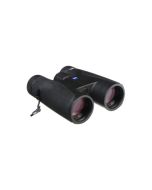
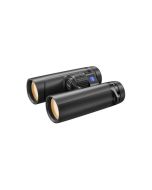
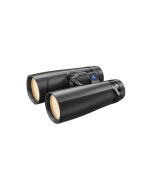
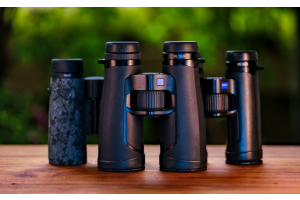
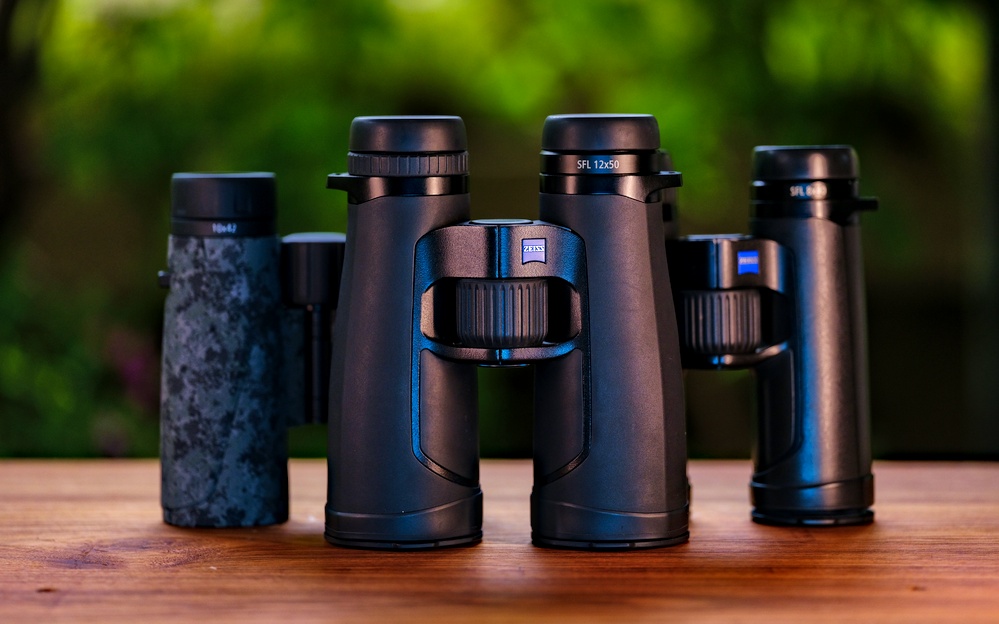
If you've browsed our binoculars inventory, you may have noticed that we carry three models of Zeiss binocs: the 10x42 Terra ED, the 8x40 SFL, and the 12x50 SFL. They all wear the Zeiss badge, but they're built for different jobs and different budgets. This guide breaks down how they actually differ, so you can pick the right pair for your trip instead of guessing.
Binocular basics: what do the numbers mean?
Before the comparison, here is a quick primer on the terms you will see on every binocular spec sheet:
The notation (e.g., 8x42, 10x42, 12x50)
Every binocular is labeled with two numbers separated by an "x," like 8x42. The first number is the magnification, and the second is the objective lens diameter in millimeters. So an 8x42 binocular magnifies objects 8 times and has front (objective) lenses with a 42mm diameter.
Magnification
This tells you how much closer an object appears. With 8x magnification, something 800 meters away looks as if it is 100 meters away. Higher magnification isn't automatically better: it also amplifies hand shake, narrows the field of view, and makes it harder to quickly find a moving subject (like a bird in flight). 8x and 10x are generally easier to hold steady handheld; 12x and above benefit from a steadier hand or a brief brace point.
Objective lens diameter
This is the diameter of the front lenses, in millimeters. A larger objective lens gathers more light, which generally means a brighter image, especially in low light — but it also adds weight and bulk. This is why a 50mm binocular is noticeably heavier than a 40mm one at the same magnification.
Exit pupil
Exit pupil is the diameter of the beam of light that reaches your eye, calculated by dividing the objective lens diameter by the magnification (for example, 42 ÷ 10 = 4.2mm). A larger exit pupil generally means a brighter, easier-to-use image, particularly at dawn, dusk, or in shaded forest. As a rough guide, 4mm and above is comfortable for most daylight and twilight use; below that, the image can start to feel dimmer, especially for older eyes where the pupil doesn't dilate as widely.
Field of view (FOV)
FOV describes how wide an area you can see through the binoculars, usually given in feet at 1,000 yards (or meters at 1,000 meters). A wider FOV makes it easier to locate and track moving subjects, like birds or wildlife, without having to hunt around for them. FOV and magnification are inversely related: for binoculars from the same product line, higher magnification typically means a narrower field of view.
Close focus distance
This is the shortest distance at which the binoculars can still focus on a subject. A shorter close focus distance is helpful for observing things like butterflies, insects, or nearby plants rather than only distant subjects.
Light transmission
Expressed as a percentage, this tells you how much of the light entering the front lenses actually reaches your eye, after accounting for loss through the glass and coatings. Higher-end glass and coatings (like Zeiss's T* coating) push this number higher, which matters most in low-light conditions.
With those terms in hand, here's how the Terra ED and SFL models actually compare.
Quick comparison
| ZEISS 10x42 Terra ED | Zeiss 8x40 SFL | Zeiss 12x50 SFL | |
|---|---|---|---|
| Magnification | 10x | 8x | 12x |
| Objective lens | 42mm | 40mm | 50mm |
| Weight | ~726g (25.6 oz) | 640g (22.6 oz) | 872g (30.8 oz) |
| Field of view @ 1000m | 330 ft | 420 ft | 315 ft |
| Exit pupil | 4.2mm | 5.0mm | 4.2mm |
| Light transmission | 88% | 90% | 90% |
| Close focus | 5.25 ft | 4.9 ft | 5.9 ft |
| Housing | Fiberglass-reinforced polycarbonate | Magnesium alloy | Magnesium alloy |
| Best for | Everyday, entry-level use | Low-light, all-day carry | Distant subjects, detail work |
| Rent (1 Day) | ₹500 | ₹650 | ₹850 |
| Rent (2 Days) | ₹900 | ₹1,200 | ₹1,600 |
| Rent (5 Days) | ₹2,100 | ₹2,750 | ₹3,750 |
Optical quality: entry-level vs. flagship glass
This is really the core difference between these three, and it's worth understanding before you look at magnification or weight.
The Terra ED sits in Zeiss's entry-level tier. It uses SCHOTT ED (extra-low dispersion) glass and Zeiss's MC multi-coating, which is genuinely good glass for the price point — you get sharp, high-contrast images with well-controlled color fringing. The 88% light transmission is good but not class-leading, and edge sharpness softens a bit toward the periphery of the view.
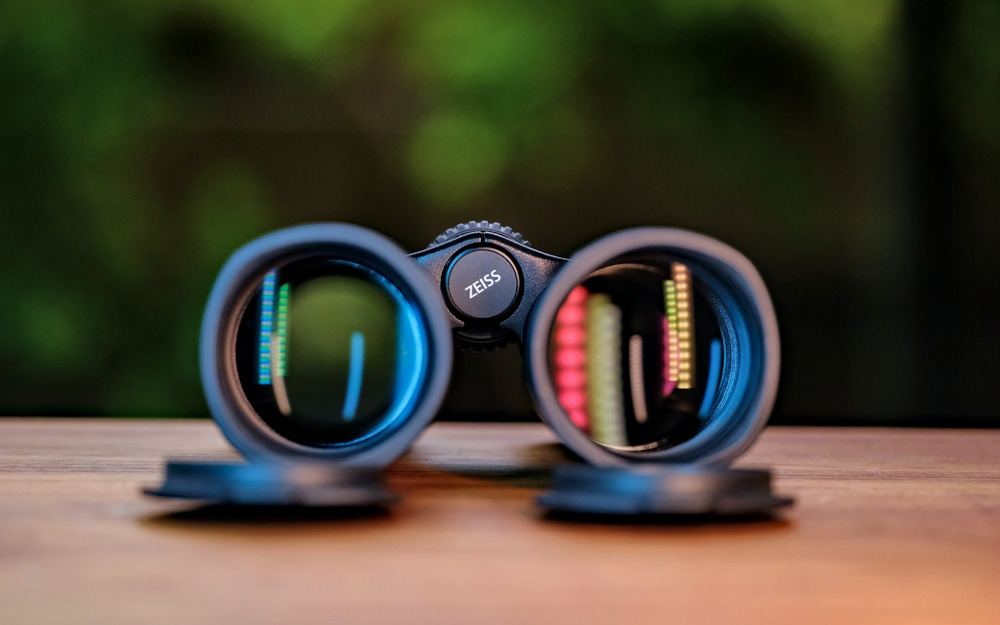
Both SFL models step up to Zeiss's UHD (Ultra-High-Definition) optical concept, which is a meaningfully different tier of glass. It is built to compete with Zeiss's higher-end SF line, just in a lighter body. You get 90% light transmission, ZEISS T* coating, and FieldFlattener technology, which keeps the image sharp all the way to the edge of the field of view rather than just in the center. If you use both side by side, the difference is noticeable in low light and at the edges of the frame.
So: the Terra ED is a well-made everyday binocular, and the SFLs are genuinely premium optics that happen to come in a lightweight body. If image quality is your top priority and budget allows, either SFL will outperform the Terra ED.
Portability and handling
Weight and bulk matter more than people expect once you've been carrying binoculars around your neck for a few hours.
- SFL 8x40 is the lightest of the three at 640g, helped by its magnesium housing and Zeiss's SmartFocus design, which places the focus wheel forward for a more natural finger reach. It is genuinely comfortable for a full day of hiking, birding, or travel.
- Terra ED 10x42 is close behind at roughly 726g. It is a compact, well-balanced binocular for its class, though the housing material (fiberglass-reinforced polycarbonate rather than magnesium) is a step down in build feel from the SFL line.
- SFL 12x50 is the heaviest at 872g, which is inherent to a 50mm objective lens — but Zeiss's magnesium housing keeps it notably lighter than most other 50mm binoculars, so it can be carried more easily than the spec alone suggests.
If all-day carry comfort is your main concern, the 8x40 SFL wins clearly.
Recommended use by scenario
Casual sightseeing, monuments, or general travel — The Terra ED 10x42 is the practical choice. 10x gives you a closer look at distant details (temple carvings, wildlife from a safe distance, stadium seating), it's rugged, waterproof, and priced for travel where you don't want to worry about a premium instrument getting knocked around.
Birdwatching and early-morning/dusk wildlife viewing — The SFL 8x40 is built for exactly this scenario. Its wider field of view (420 ft) makes it easier to find and track moving birds, and the larger 5mm exit pupil pulls in more light during the low-light hours when birds are most active. It's also light enough to keep raised for long stretches.
Distant wildlife, safaris, or stargazing — The SFL 12x50 is the specialist tool here. The extra magnification and larger 50mm objective bring in more light and more detail from far away, which is useful on safari drives or for scanning open landscapes and night skies. It's the heaviest of the three, so it suits scenarios where you're not hiking long distances but want the reach.
Photography and videography professionals scouting locations — Either SFL model is worth the extra rental cost over the Terra ED. The edge-to-edge sharpness and better low-light performance make it easier to actually evaluate a scene (composition, wildlife behavior, lighting conditions) before you commit to setting up a camera.
Which one should you rent?
If you're still deciding, here's the short version:
- On a budget, or want a reliable all-rounder: ZEISS 10x42 Terra ED
- Want the best glass and lightest carry, especially for birding or low light: Zeiss 8x40 SFL
- Need maximum reach for distant subjects and can carry a bit more weight: Zeiss 12x50 SFL
All three are available for rent in Pune and Mumbai, with delivery and pickup available in both cities. If you're not sure which fits your trip, reach out to us on WhatsApp or call +91 87 67 47 7102 and we're happy to help you decide.
Rental prices shown are current as of the publish date. Please confirm live pricing and availability on the product pages before booking, as prices are subject to change.