Sorry but the selected product is not available in the quantity you requested. Please enter your contact details below to see if we can accomodate your request
Sony's Alpha 7R series of cameras has always been a popular choice for landscapers, portrait
and product photographers and for some wildlife and bird photographers.
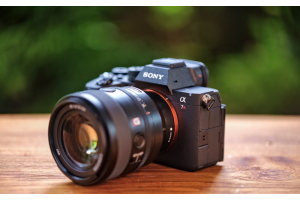
Sony has launched the Alpha 7R VI (ILCE-7RM6), the sixth generation of this
high-resolution series and the successor to the A7R V. This camera carries a new
66.8-megapixel back-illuminated stacked sensor paired with the BIONZ XR2 engine, bringing
speed and video capability that were previously limited to Sony's Alpha 1 line down into
the R-series. The Sony Alpha 7R VI is now available to rent at Primes & Zooms.
Here is what the camera offers, what it's great for and where it may not be the right tool
for the job.
Note: dynamic range, stabilization, and battery-life figures below are taken from Sony's own stated
numbers. Real-world results may differ.
The Canon EOS R6 V Is Now Available to Rent at Primes & Zooms | Blog
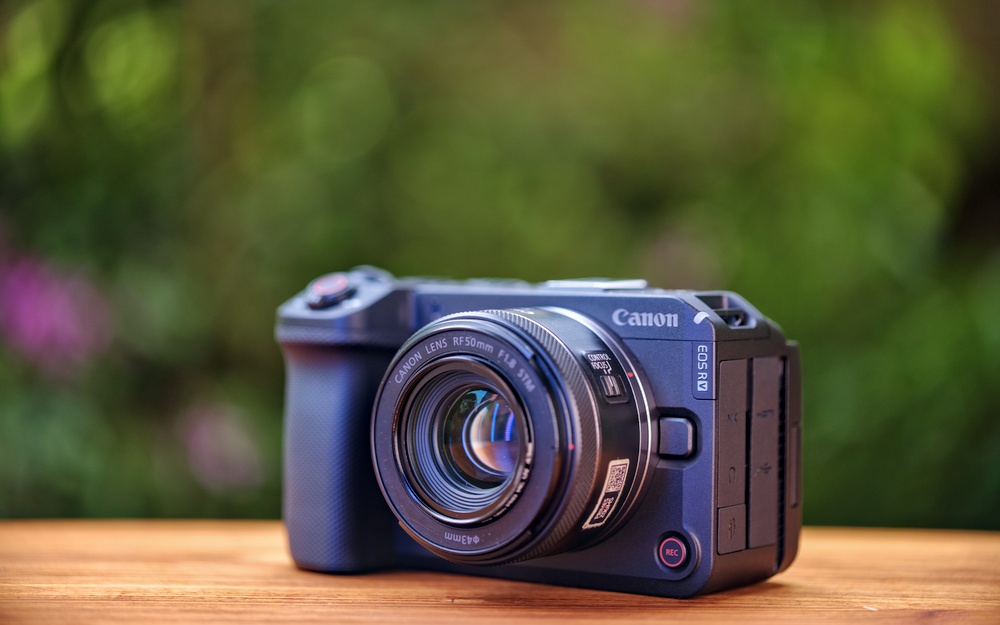
Canon's EOS V-series has been a video-first lineup so far with the R50 V and the PowerShot V1
but the EOS R6 V is the first full-frame body in this line. It shares its 32.5MP sensor
and Dual Pixel CMOS AF II system with the EOS R6 Mark III and the Cinema EOS C50, but drops
the photo-first design for a vertical shooting UI, a front record button, a power zoom
lever, and an on-board fan for active internal cooling. The Canon R6 V is now available to rent at Primes & Zooms.
Here's a look at what the camera actually offers, and where it may not be the right tool
for the job.
Key Specifications
Sensor
32.5MP full-frame CMOS
Processor
DIGIC X
Lens Mount
Canon RF
Max Video
7K RAW up to 60p; 7K 30p Open Gate (3:2); oversampled 4K up to 60p; 4K 120p slow motion
Autofocus
Dual Pixel CMOS AF II with subject detection
Stabilization
In-body IS, up to 7.5 stops with compatible lenses
Sony ZV-E10 II Is Now Available to Rent at Primes & Zooms | Blog
Home Delivery and Pickup in Pune & Mumbai | +91 87 67 47 7102
Now Available to Rent
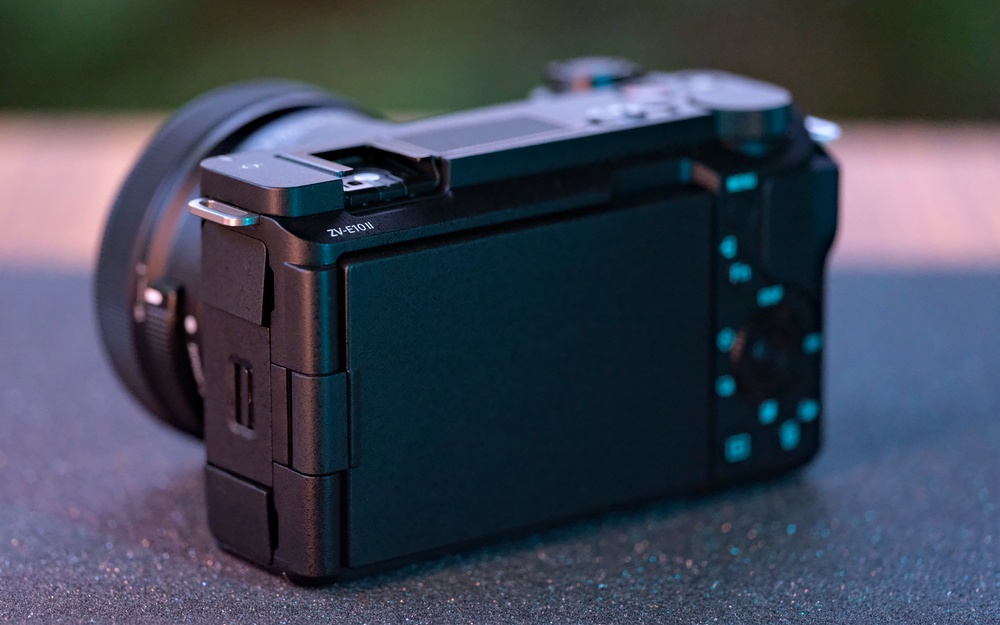
Sony's ZV-E10 was one of the most popular vlogging cameras we've stocked at Primes & Zooms; affordable, compact, E-mount, and purpose-built for content creation. The ZV-E10 II takes everything that worked and fixes almost everything that didn't. It's now available to rent from us in Pune as well as in Mumbai.
Here's a thorough look at what this camera is, what changed from the original, who it's built for, and, just as importantly, who should probably avoid it.
Key Specifications
Specification
Sony ZV-E10 II
Sensor
26MP APS-C BSI Exmor R CMOS (23.5 × 15.6mm)
Processor
BIONZ XR
Lens Mount
Sony E-mount (full E-mount lens compatibility)
Autofocus
759-point phase-detection, Real-Time Tracking, Eye/Face/Animal AF
Max Video
4K/60p 10-bit 4:2:2 (XAVC HS / XAVC S); up to 200Mbps
In this fourth video of the series, Ram Balmur talks about the Nikon Z system and cameras such as the Nikon Z7 Mark II, Z6 Mark II as well as the older Nikon Z7 and Z6. Starting off with the specific advantages that the Z system offers over DSLRs, Ram also talks about his experience using this system extensively and shares some insight based on his learning. Ram then moves on to a discussion on how to set up a Nikon Z system camera for best autofocus performance for event, portrait, documentary and landscape photography.
In the third video of this series, Ram Balmur takes a look at one of the oldest full-frame mirrorless systems, the Sony Alpha series of cameras, currently encompassing bodies such as the Sony A7R Mk III, A7R Mk IV, A7 Mk III, A1 and A9 Mk II bodies. Ram discusses the benefits of using a Sony Alpha system, particularly on account of this system being around for a longer period of time.
In the second video of this series, Ram Balmur takes a closer look at the Canon EOS R system and bodies such as the Canon EOS R5, R6, R and RP, enumerating the specific benefits of this mirrorless system over DSLRs. Ram also goes on to show how to configure an RF body to optimise autofocus for shooting events, portraits and landscapes.
Mirrorless cameras have been around for a while now and they have been evolving thanks to continuous iterations and innovations by manufacturers. In this first of a series of four live videos, Ram Balmur talks about the key differences between DSLR cameras and mirrorless cameras and the advantages and disadvantages of mirrorless cameras.
As we enter 2020, we have once again drawn up a list of the most rented gear of 2019. Before I get to the numbers, the usual disclaimer: this is just data. This list only shows what was the most popular gear in 2019, among the customers we served. Other than the information that this gear went out the maximum number of days, this list does not offer any additional meaningful insight. It is certainly not a reflection on the quality of any particular gear. This data also does not reflect emerging trends because the sheer numbers of copies of older equipment crowd out newer equipment until it achieves critical mass (which explains why you do not see too much mirrorless gear here yet).
The lists below are ranked in the order of the number of days each item went out during the year across all its copies. Figures in brackets indicate the position of the item in the Most Popular Gear of 2018 list.
If you are new to photography or just migrating from a cellphone or compact camera to a DSLR camera, these pointers can help you select the right kit for starting out:
The Budget:
Photography is an extremely expensive hobby and there really is no end to the amount of money you can spend on gear and still wish for something better! This makes it very important to set a budget for yourself so that you do not get carried away. As of 2019, a good starter budget should be in the range of Rs 35,000 – Rs 60,000 for a camera body and one or two lenses. It is best not to buy too much equipment before you get a good idea of what you will be shooting. We strongly recommend that you rent from Primes & Zooms (P&Z) and try the equipment before buying it.
The Camera System:
The first question you will be faced with is which body to buy. However, it makes sense to take a step back and think of which system you want to adopt. Much like the choice between Android, Windows and iOS, different camera systems